A palatal expander is a small dental appliance that gently widens a child’s upper jaw to create space for teeth and support healthy breathing. At Smile Arc Pediatric Dentistry in San Diego, our pediatric dentists use expanders during the early growth years, when the jaw is still flexible, to correct crossbites, relieve crowding, and encourage better nasal airflow.

Children’s jaws grow fast, and that growth is an opportunity. When a child’s upper jaw is too narrow, it can crowd the teeth, throw off the bite, and leave less room for comfortable nasal breathing. A palatal expander takes advantage of natural growth to widen the jaw gently, often making later treatment simpler or even unnecessary. At Smile Arc Pediatric Dentistry in San Diego, our pediatric dentists fit expanders for children across 4S Ranch, Rancho Bernardo, and the surrounding North County communities, with a calm, kid-friendly approach at every step.

What Is a Palatal Expander, and How Does It Work?
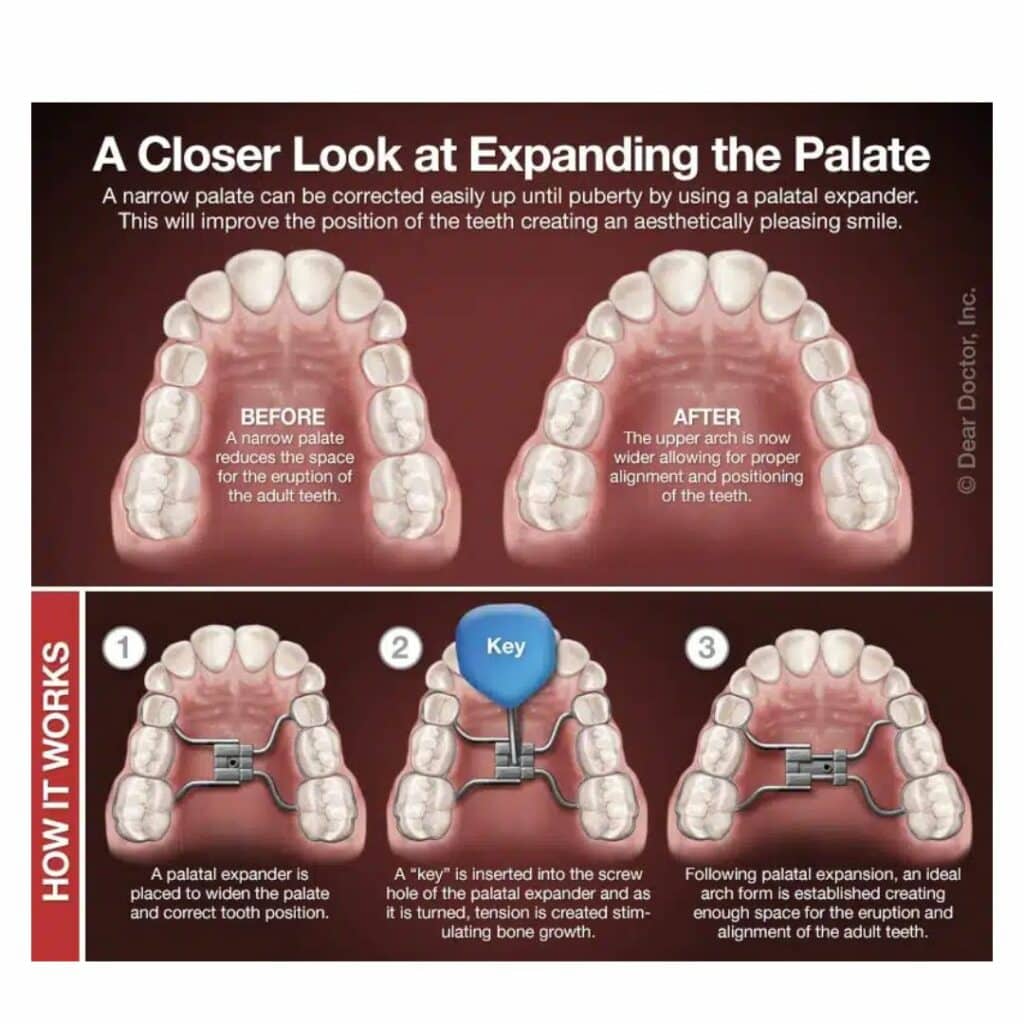
A palatal expander is a custom appliance that fits over several upper back teeth. It works because the upper jaw, or maxilla, forms as two halves that do not fully fuse until the teen years. During childhood, gentle, steady pressure can guide those halves slightly apart, and new bone fills in to stabilize the wider jaw.
The result is more room in a growing mouth. Expansion usually happens over a few weeks, and the appliance then stays in place for several months while the new width sets. Most children adapt quickly and describe the feeling as pressure rather than pain.
Why Age 6 to 11 Is the Ideal Window
Timing is everything with expanders. Between roughly ages 6 and 11, the jaw is still developing and responds gently and predictably to expansion. Once the palate fuses in the teen years, widening it becomes more involved and sometimes requires more complex procedures. This is exactly why the American Association of Orthodontists recommends a first orthodontic check by age 7, and why our pediatric dentists watch jaw growth at every routine checkup and during orthodontic screening visits.
When Does a Child Need an Expander?
Not every child needs one. We recommend expansion only when it solves a real problem. The most common reasons include:
- Crossbite: the upper jaw is too narrow, so the upper back teeth bite inside the lower teeth.
- Crowding: there is not enough room for permanent teeth, and widening the jaw can create space without removing teeth.
- Impacted teeth: a tooth is blocked from coming in, and added space can help it erupt in the right place.
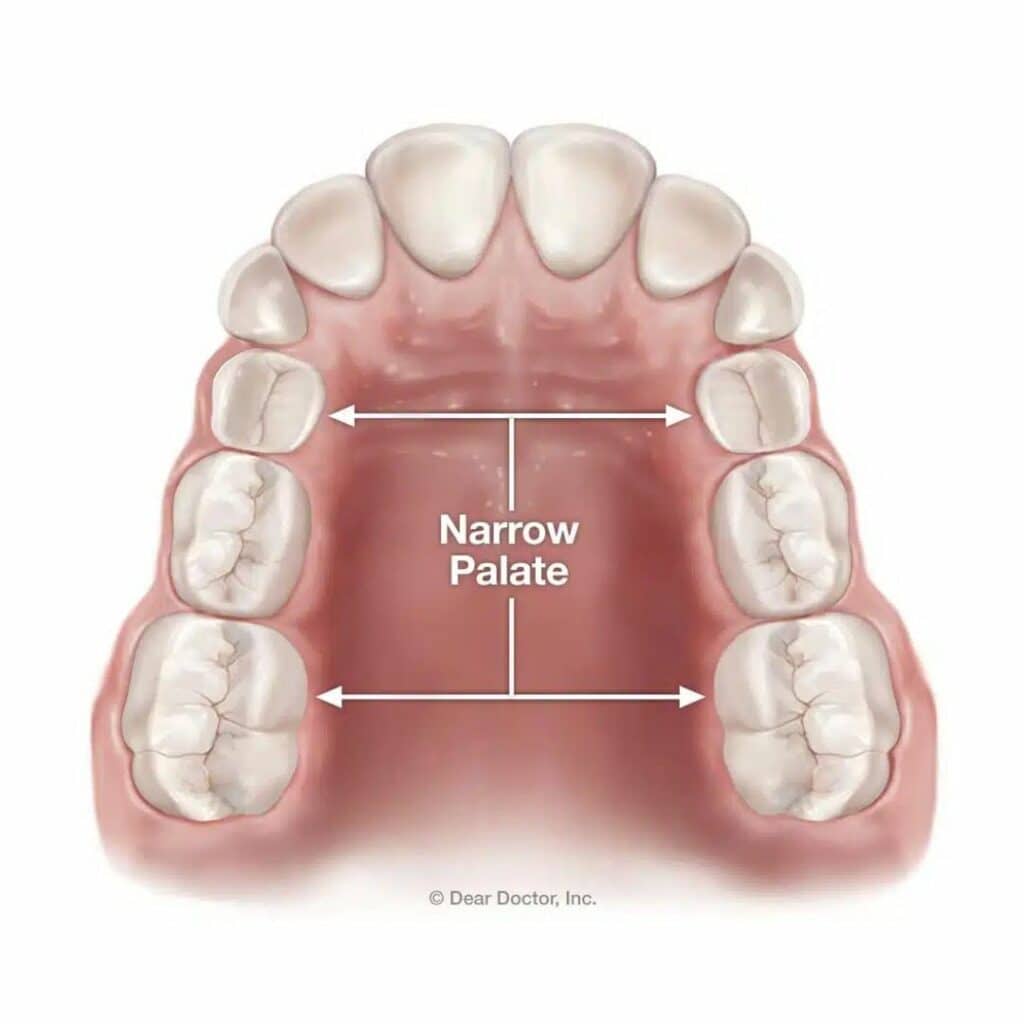
- Narrow palate and airway concerns: a narrow upper jaw can crowd the tongue and limit nasal airflow, which connects to our airway-focused care.
Types of Expanders We Use
Because we focus on children, we choose the appliance that fits the child’s age and needs:
- Quad helix: a fixed expander that works gently without a daily key turn. It is often a good fit for younger children whose palate is still very flexible, and it avoids the temporary front-tooth gap that can come with faster expansion.
- Rapid palatal expander (RPE): a fixed appliance with a small screw that a parent turns slightly with a special key each day to guide steady widening over a few weeks.
We will explain which type we recommend for your child and exactly how it works before anything begins.
What to Expect With an Expander
After each adjustment, your child may feel mild pressure or soreness for a few minutes, usually less than what comes with tightening braces. Speaking and eating can feel different for the first few days as the tongue gets used to the appliance, and that passes quickly.
If a small gap appears between the front teeth during expansion, that is a good sign. It means the appliance is working, and the gap typically closes on its own as the teeth settle. We see your child regularly throughout treatment to keep everything on track and comfortable.
Schedule a Palatal Expander Evaluation in San Diego
If your child has a narrow jaw, a crossbite, crowding, or breathing concerns, an evaluation can tell you whether a palatal expander would help, and when. Take advantage of your child’s natural growth while the timing is ideal. Call (858) 277-8086 or request a visit online.
Conveniently located in the 4S Ranch and Rancho Bernardo area, proudly serving San Diego, Del Sur, Carmel Mountain Ranch, Poway, Carmel Valley, and Rancho Penasquitos.
Reviewed by Dr. Adam Ellenthal, board-certified pediatric dentist with airway-focused training.
Frequently Asked Questions About Palatal Expanders
Is my child too young, or too old, for a palatal expander?
Expanders work best while a child is still growing, generally between ages 6 and 11, because the upper jaw has not yet fused. An evaluation tells you whether your child is in the ideal window. After the palate fuses in the teen years, expansion becomes more complex.
How much does a palatal expander cost in San Diego?
Costs vary by the type of expander and your child’s needs. As a general guide, children’s expanders nationally tend to run in the range of about $1,000 to $3,500, and many dental plans cover a portion when treatment is medically appropriate. We provide an exact estimate after the evaluation and review your benefits with you.
Does a palatal expander hurt?
Most children feel pressure rather than pain. There may be mild soreness for a few minutes after an adjustment, especially in the first several days, but it settles quickly and is generally easy to manage.
How long will my child wear the expander?
Active widening usually takes a few weeks, and the appliance then stays in for several months, often three to six months total, so new bone can stabilize the wider jaw. Your child’s timeline depends on their specific needs.
Can an expander help with my child's mouth breathing or snoring?
In some children, widening a narrow upper jaw can improve nasal airflow and support better breathing. An expander is not a direct treatment for sleep disorders, but it can be one helpful part of our broader airway-focused care. An evaluation helps determine whether this applies to your child.