Resin infiltration is a non-invasive treatment that improves the appearance of white spots on teeth without drilling, shots, or removing healthy enamel. Using a material called Icon, it blends the white area into the surrounding tooth in a single visit. It is a gentle, conservative option for children and teens, especially for white spots left after orthodontic treatment.
If your child or teen has noticed white spots on their teeth, you are probably wondering what caused them and what can be done. The good news is that resin infiltration offers a gentle, non-invasive way to improve their appearance, with no drilling and no anesthesia. At Smile Arc Pediatric Dentistry in San Diego, we use this conservative approach to help kids and teens feel more confident about their smiles while protecting their natural teeth. Here is how it works and what to realistically expect.
What Causes White Spots on Teeth?
White spots are areas where the enamel has lost some of its minerals or formed unevenly. Common causes include:
- Decalcification after orthodontic treatment, when plaque builds up around brackets and leaves marks once the appliance comes off.
- Early enamel demineralization, an early, pre-cavity weakening of the enamel.
- Enamel hypomineralization or developmental defects, where the enamel formed differently as the tooth developed.
Some white spots are purely cosmetic, while others signal early enamel changes worth watching. If a spot reflects active early decay, prevention comes first. You can learn more on our tooth decay and cavities page. Resin infiltration is for the cosmetic appearance of stable white spots.
What Is Resin Infiltration (Icon)?
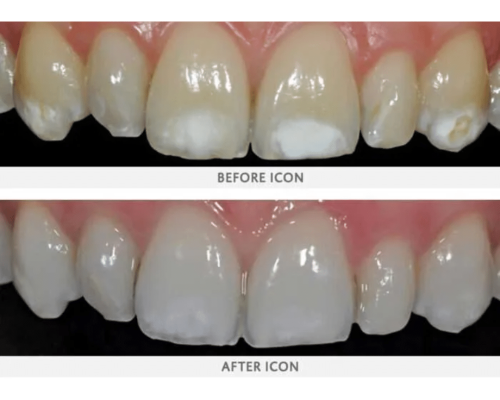
Resin infiltration is a minimally invasive cosmetic treatment that improves how white spots look. Instead of drilling or placing a veneer, a resin material called Icon is applied to the tooth, where it penetrates the porous enamel of the white spot and blends it with the surrounding tooth structure. Think of it as sealing and camouflaging the spot from within. There is no drilling, no shots, and no removal of healthy enamel.
What to Expect During Treatment
The visit is straightforward and comfortable. After cleaning the tooth, we apply the Icon material to the white spot, allow it to infiltrate the enamel, and harden it with a special light. There is no numbing required because nothing is drilled, and most cases are completed in a single visit. Your child can eat and drink normally afterward, and we will share any simple care tips before you leave.
Honest Results: What Resin Infiltration Can and Cannot Do
We believe in setting clear expectations. Resin infiltration cannot guarantee that a white spot will disappear completely, but in most cases it provides a significant cosmetic improvement in one simple visit, blending the spot so it is far less noticeable. Results vary depending on the depth and type of the white spot, which is why we evaluate each tooth carefully and tell you honestly what to expect before treatment. Our goal is a more even, natural-looking smile achieved as conservatively as possible.
Is Your Child or Teen a Candidate?
Resin infiltration works best for certain types of enamel discoloration. During a consultation, we evaluate the depth of the white spots, the overall health of the enamel, your child’s cosmetic goals, and any history of orthodontic treatment. A real benefit for younger patients is that, unlike veneers, resin infiltration does not require waiting for growth to finish or removing tooth structure, so it can often be done while a child or teen is still young. If the spots qualify, treatment can usually be completed in a single appointment.
Cost & Insurance in San Diego
Because resin infiltration is typically a cosmetic treatment, it may not be covered by dental insurance, though coverage varies by plan. The cost depends on how many teeth are treated, so we provide a clear estimate after evaluating your child rather than a flat price. Our team will review the details and any out-of-pocket cost with you up front. See our financial and insurance page for more.
Explore a Gentle White Spot Solution in San Diego
If white spots are affecting your child’s confidence, we would be glad to evaluate whether resin infiltration is a good fit, with honest guidance and no pressure. Call (858) 277-8086 or request an appointment online today.
Conveniently located in the 4S Ranch and Rancho Bernardo area, proudly serving San Diego, Del Sur, Carmel Mountain Ranch, Poway, and Rancho Penasquitos.
Reviewed by Dr. Sabrina Chandra, pediatric dentist at Smile Arc Pediatric Dentistry.
Frequently Asked Questions
What causes white spots on my child's teeth?
They usually come from enamel that lost minerals or formed unevenly, often after orthodontic treatment (decalcification around brackets), from early enamel demineralization, or from developmental enamel differences. A quick evaluation tells us whether a spot is purely cosmetic or needs preventive attention first.
Can white spots be improved without drilling?
Yes. Resin infiltration improves the appearance of many white spots without drilling, shots, or removing healthy enamel. It cannot guarantee a spot will vanish completely, but most cases see a significant cosmetic improvement in a single visit.
Is resin infiltration permanent?
The treatment is long-lasting because the resin becomes part of the enamel surface, though results can vary by case. Good daily care and regular checkups help maintain the appearance over time, and we will let you know what to expect for your child’s specific spots.
Does the procedure weaken the tooth?
No. Resin infiltration is conservative and can actually help by sealing porous enamel and protecting against further demineralization. The goal is always to preserve and protect your child’s natural tooth structure.
Is resin infiltration safe for teenagers?
Yes. It is considered safe and minimally invasive by dental professionals, which makes it especially appealing for teens who want a cosmetic improvement without drilling or anesthesia.